
SIMATIC IPC ORCLA System Description
SIMATIC IPC ORCLA is a comprehensive system designed to minimize IPC-related operating costs throughout the device lifecycle—from development to operation. It provides a unified platform for managing, monitoring, and maintaining SIMATIC IPC fleets.
System Architecture
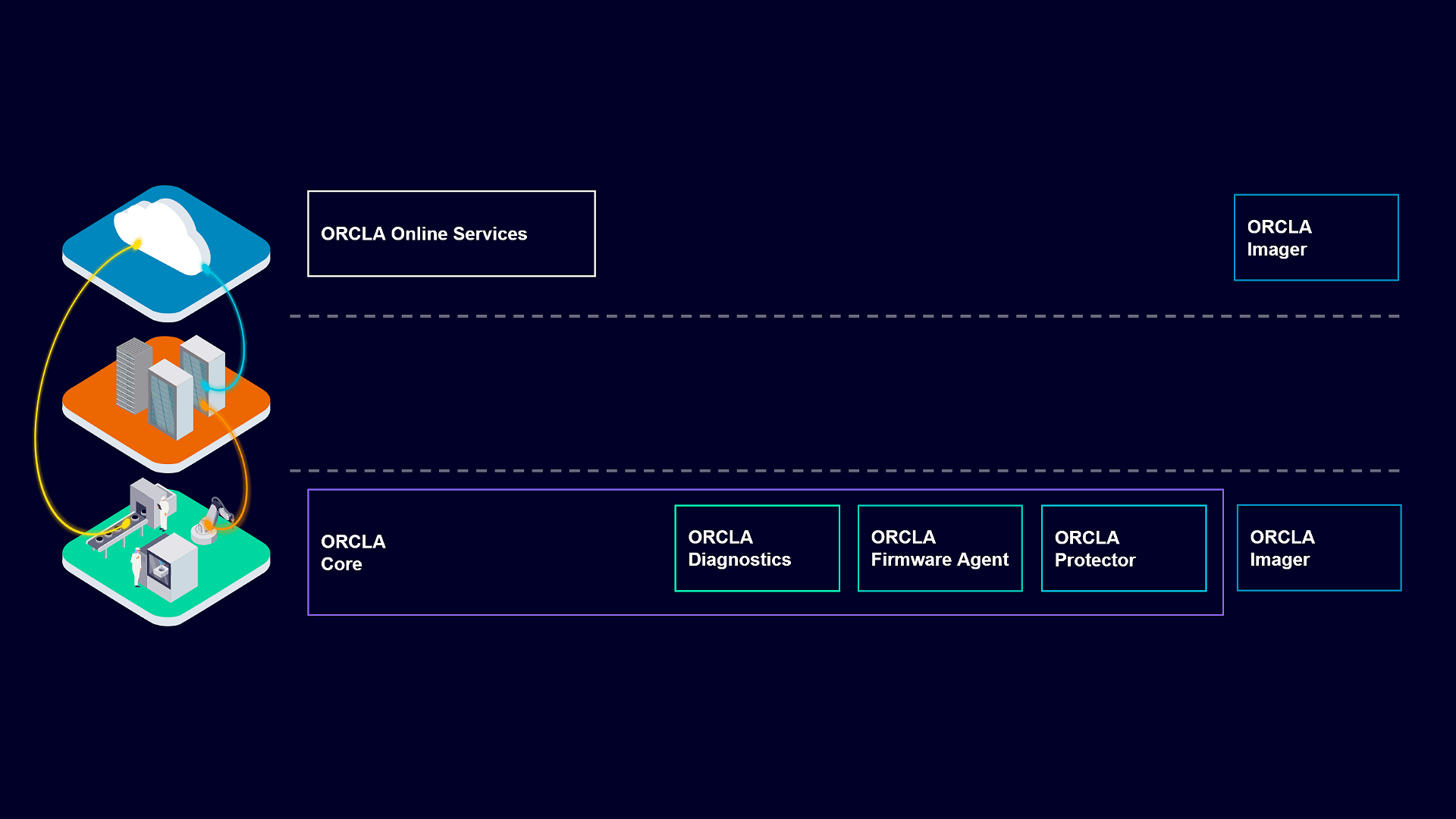
The ORCLA system consists of three primary building blocks:
1. ORCLA Core
The ORCLA Core is the central agent installed on the local SIMATIC IPC. It acts on the operating system level (supporting both Windows and Linux) and serves as the foundation for all ORCLA functions.
- Operational Modes: Works in both offline and online (Cloud-connected) modes.
- Modular Approach: Utilizes a modular structure including Diagnostics, Firmware Agent, and Protector modules.
- Management: Enables individual, machine-controllable, and remote management of the IPC platform.
2. ORCLA Online Services
ORCLA Online Services is a cloud-based application used for the centralized management of the IPC fleet.
- Fleet Management: Registering and licensing IPCs.
- Resource Access: Overview of registered IPCs, OS image downloads, and license activation.
- Data Access: Provides access to IPC identification data (e.g., MAC addresses) remotely.
3. ORCLA Imager
The ORCLA Imager is integrated directly into the IPC BIOS.
- Functionality: Enables the OS image restore process directly from Online Services to the device.
- Benefit: Allows restoring the OS to a factory state without the need for physical media like USB sticks.
Key Features
- Standardization & Deployment: Define application setup requirements independent of IPC hardware and perform scaled commissioning.
- Remote Configuration: Remote configuration of drivers and firmware, including BIOS settings and boot behavior.
- Continuous Monitoring: Real-time monitoring of hardware components (temperature, fan speed, CMOS battery, RAID, PSU, and disk health).
- Maintenance: Ensures operation without interruption and protects the shop floor from unplanned downtime.
- Security (Protector): Custom security settings for trusted applications, write protection, and limitation of USB ports.
APIs and Integration
ORCLA provides standardized interfaces for integration with third-party and partner applications.
RESTful Web API
The RESTful API (available from ORCLA Core V1.2) allows external applications to extract critical IPC identification data. This is essential for asset tracking and automated inventory management.
- Available Data Points:
- Model Name
- Manufacturer
- Order Number (MLFB)
- Serial Number
- Host Name
- MAC Addresses
- Firmware Information
- Operating System
- ORCLA Version